

Did you catch this over the weekend? An ad from Good Good Golf and Callaway Golf depicted a male golfer assaulting and berating a female golfer for touching his golf club.
Can you see the problem?
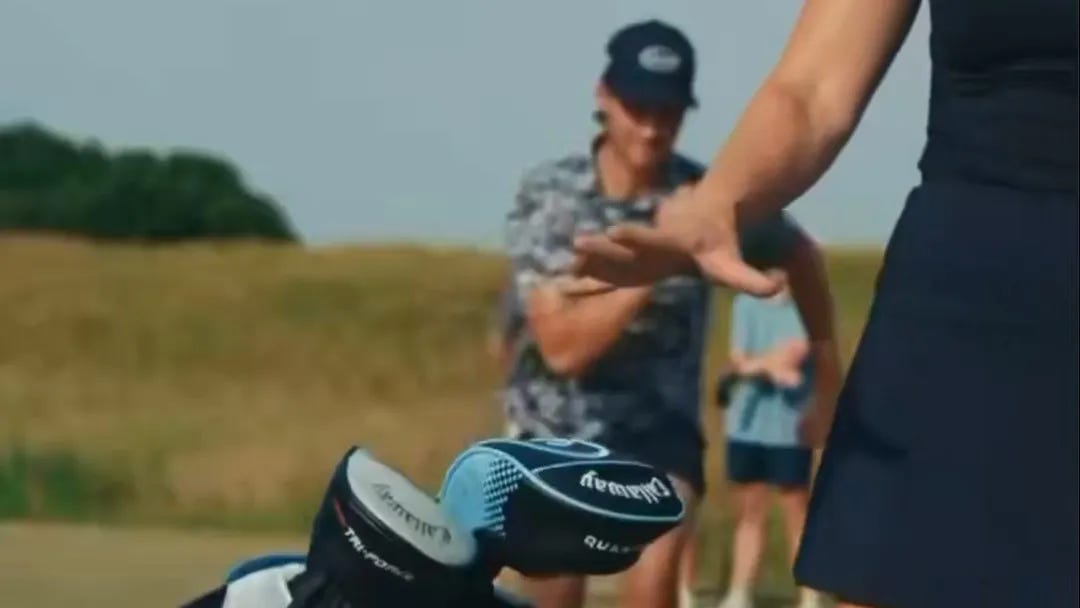
The backlash was swift, loud and frequently dumbfounded. Good Good apologized and removed the ad. Callaway issued a statement expressing its disappointment. The PGA Tour, which will host the inaugural Good Good Championship this fall, condemned it.
But the real question is not why the ad was removed. It is how it got that far.
While Good Good Golf is a relative upstart, Callaway Golf has been around since 1982. In the two companies you have the understanding of the media environment (which is how Good Good has grown) and the institutional safeguards and judgement of a nearly 45-year-old company. Between them, one understood the audience and the other should have understood the risk. That combination should have prevented this.
An ad does not simply appear. Someone conceived it. Other people agreed to participate in it. It was filmed, edited, captioned and posted. Not to mention, budgeted for. At multiple points, it was approved and someone could have asked “Is this really a good idea?” Because, despite the statement from Callaway washing their hands, you can’t tell me that no one in their company saw the ad and ok’d it. You can’t tell me no one at Good Good said, um, hold up a second.
Maybe no one did.
That is why this is larger than a broken approval process. It is a culture and power problem.
Here are the “ifs.” If the people involved watched the finished ad and thought it was funny, the culture failed. If someone objected and was overruled, the culture failed. If someone had doubts but decided it was safer to remain silent, the culture failed. And if Callaway allowed its name and product to be used without a multi-level review, its structure failed.
And Callaway’s statement only raises more questions. The company said it was “disappointed by the content that was posted,” as if it were an unrelated observer rather than the established corporate partner whose product was being promoted. Did Callaway approve the ad? Did anyone there see it before publication? If not, why not?
The question shouldn’t be about the approval process. It is about the culture you build and the perspectives you have making decisions. To avoid preventable crisis, which this was, you need to build a culture that encourages questions and a leadership team that brings different perspectives to the table. Part of your culture has to be that people are expected to question bad judgment, empowered to stop questionable work and protected when they do.
Having a specific culture that encourages a viewpoint is a good thing, but you have to build in safeguards that create a posture of mitigating crisis especially self-inflicted ones. If no one in your organization can do that—or if they can say it but no one has to listen—you do not have an approval problem.
You have a crisis waiting for the spotlight.
Callaway probably didn't approve it, and that's the actual finding.
Brand partnerships with creator studios usually run on a licence rather than a review. Product placement, some usage terms, maybe brand guidelines attached, and the creator retains creative control because that's the thing being bought. Nobody at Callaway sits in a cut. Their statement reads like an unrelated observer because contractually they nearly were.
Which means the failure isn't that a review got skipped. It's that the deal was structured without one, and that decision was made by someone who saw creator content as media buying rather than brand output. Cheaper, faster, and the risk sits entirely with a name that took forty-five years to build. Happens all the time. sadly i made this mistake as well
Your culture point still holds inside Good Good. But the Callaway lesson is narrower and more useful: if your logo appears in it, you need approval rights on the final cut, in writing, or you've outsourced your brand to a room you've never been in.